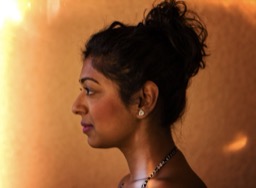

Falon Bahal
Using code to say something,
not just solve something.
I make things at the intersection of strategy, design, and technology.
Currently running TUKU Group, an independent creative house for founder-led businesses. Craft over noise.
PMP-certified. Vanilla JS advocate. Building tools for human-AI collaboration.
Less isn't deprivation. It's clarity.
When you remove what's unnecessary, what remains has room to matter.
Don't use what you can't explain.
In tools, in commitments, in beliefs. If you don't understand it, it owns you.
There's a point where more becomes noise.
The skill is recognizing that point before you've passed it.
The basics aren't boring.
They're what everyone skips and then circles back to. Start there. Stay there longer than feels productive.
Choose things that will still work in ten years.
Relationships, practices, objects, ideas. Trends are a distraction from what lasts.
The default path is paved with other people's decisions.
Going vanilla means choosing on purpose, even when it's slower.
Why be chocolate pistachio praline caramel swirl when you can be vanilla?
These notes are an exploration of that question. Not minimalism as aesthetic, but as philosophy. The idea that vanilla isn't plain or boring or the absence of flavor. It's a flavor itself. One with depth, complexity, and quiet confidence.
Vanilla is the choice to not add more. To trust that enough is enough. To find the extraordinary in the fundamental.
Longer-form thinking. The kind that doesn't fit in a file name or a status update.
These are observations from the middle of things. Written while the work is still happening, not after it's been cleaned up for a case study.

The Job Changed. Nobody Updated the Description.
The Old Shape
The traditional Project Manager role was coordination.
I know because I lived inside it.
Keep the timeline. Manage the handoffs. Track down approvals. Make sure the designer and the developer are talking. Ensure that nothing falls through the cracks.
That was the job. The visible layer. The part that was easy to measure, easy to point to, easy to write into a job description.
Alongside those tasks, other things appeared as line items. "Cross-functional communication." "Stakeholder alignment." "Risk identification." Listed right next to "maintain project timelines" and "facilitate standups." As if they're the same kind of work.
They're not.
The judgment work was assumed to just happen alongside the coordination. It got credit only when it failed.
The Shift
The tools I used two years ago look different than the tools I use now.
The work looks different too.
The coordination layer is disappearing. Status updates, dependency tracking, timeline management. These run through systems now. Visibility is exactly what automates first.
The skills don't disappear. They move. The instincts that made someone good at coordination, the ability to anticipate dependencies, to see where handoffs break, to know which questions will surface too late. Those translate. They just apply earlier. Before execution. Before the system takes over.
A Different Ratio
A recent engagement made this concrete.
I spent more time in documentation than in build. Weeks defining scope, mapping dependencies, writing specifications that anticipated questions before anyone asked them. Edge cases named. Capability boundaries drawn. Handoff points documented so clearly that when execution moved to the LLM tool, there was almost nothing left to coordinate.
In the old way of working, that ratio would have signaled a scheduling failure. Documentation dragging. Build compressed. Something wrong with the timeline.
But nothing was wrong. The build moved fast because the definition was precise. Execution became mechanical because ambiguity had already been removed.
That's where the work went. Earlier. Into the effort to crystallize clarity so that everything downstream runs clean.
Execution used to take the schedule. Now clarity does. The judgment work isn't something to get through before the real work. It is the real work.
Why Upfront Matters
The friction to good execution is shrinking. Tools are more capable every day. The gap between intent and output keeps closing.
But the friction to good input isn't shrinking. Defining the problem precisely. Naming the edge cases. Knowing what to include and what to leave out. That's still hard. That's still human.
When visibility automates, what remains is the work that no one could figure out how to measure. It was always there. It just rode along unexamined.
This is where PM skills belong now. In shaping the input that makes execution possible.
The Shape of the Work
The invisible work isn't random. It has a shape.
Holding context that no single person or system holds on its own. Knowing the business goal, the technical constraint, the political tension, and the deadline pressure all at once. Knowing which one wins when they conflict.
Defining boundaries before the work begins. Not task assignments. Capability boundaries. What gets handled here, what gets escalated there, what never should have been in scope to begin with.
Designing handoffs that don't require a meeting to explain. Structuring work so that when one phase ends and another begins, nothing gets lost in translation.
It's architecture. Not software architecture. Work architecture. The structure that determines how effort flows, where decisions live, and what happens when something falls outside the defined path.
The Reframe
The old job was about keeping things moving.
The new job is about making sure they don't need to be kept moving. Designing the system so that motion is built in. So that handoffs don't require someone in the room. So that escalation paths exist before anyone needs them.
The value sits in the clarity that makes coordination unnecessary.
This is closer to orchestration than coordination. Closer to designing the machine than running it.
The Open Question
I don't know what to call this yet.
"Project management" doesn't fit anymore. The phrase carries too much of the old job inside it. Too much of the visible work that's already shifting. Too little of the invisible work that remains.
I didn't have language for this when I was doing it. I just called it "being a good PM." But that phrase hides more than it reveals. It bundles the visible and invisible together and pretends they're the same job.
They're not.
Maybe the title changes. Maybe it doesn't matter what it's called.
What matters is that the frame is still standing. The job description is still there.
But what it used to hold is already gone.
Letter 28
I spent a lot of time over the past handful of years building things from scratch without really knowing exactly what I was doing, how I was going to do it, or where I would end up. There wasn't a destination or a goal in mind, but moreso a determination to try something new and see where it would take me.
Eight or nine months of attention and care on a single project, working with new tools to really experiment and see how far I could go in an activity, a concept, an actual tangible output. How far could I take it on my own by leveraging new tools that didn't exist five years ago? What could it look like if I created around ideas which excited me?
I built a lifestyle brand from the ground up. Conceptualized it, designed it, sourced materials, collaborated on artwork, went through sampling and production, designed and built an independent website, handled all artwork, and got it ready to function as a storefront.
When the project completed, I realized I had been doing things that I otherwise would not have had an opportunity to do in my career or any role I had previously held.
By learning these new tools, a different approach became available. I didn't have to go the traditional route to get to the output. I harnessed these tools to do things on my own that would otherwise require many people to coordinate with and work alongside.
By using diction, I built a website that was an articulation of how I saw it in my mind's eye. I took something from my imagination and created it.
I customized a site exactly to how I wanted to interact with it, evoking a unique mood upon arrival, when I clicked a button, when I scrolled from page to page. The things that I consider sexy, that indicate quality, that indicate care, that indicate intentionality.
Along with a little imagination, I created AI-generated models from scratch. I dreamed up the story for them. I became a creative director: placing models, crafting visual continuity, conducting a photo shoot.
Choosing tech stacks, programming, designing packaging, storytelling my product through visuals, and branding my own company.
As a team of 1.
It was so exhilarating, but I needed some type of definition around it. The only thing I could think of was: what type of container did I need to craft to allow this velocity of thought and inspiration to continue?
Once I opened that container, once I named it and gave it shape, something changed. I had a place where inspired ideas had permission to move around freely.
Soon after, I began working with founders, sitting with them and asking questions that you don't usually ask in a professional setting.
What if we placed people in seats based on what they were passionate about, not only what their job description says.
What if we made room for how things felt, rather than just doing what needs to get done.
And if a scope is fluid and the engagement is allowed to change shape as the real problem reveals itself, is there perhaps benefit to that rather than locking into something at the onset.
Across all these projects, all the engagements, all the conversations I was having, a handful of questions started to surface.
I thought about these questions frequently.
A lot of them pointed to value. I wanted to understand what value means. What does a meaningful contribution look like when the old way of doing things is starting to change, when things are getting updated and replaced with a velocity you can feel? What is distinctly yours, or distinctly human, when technology can do all the rest?
The inquiry itself moved me toward a thesis that I'm really excited to share.
Some conversations are worth getting started. Sometimes it takes one person to begin, and a handful of people that it resonates with, to begin the discourse just to see where it leads.
So often we limit our conversation to the topics at hand, the things that are prevalent, the headlines in our news, the things right in front of us. But I think it's important to have these small pockets of space and time that allow us to come into them with imagination and freedom from outside noise.
To speak from the heart about the things that we love and want to create in a way that's unfiltered. A chance to talk about the future, rather than the "what is".
Because in that space, something is birthed that carries its own energy which doesn't need a definition beyond that.
Letter 28 is that pocket of space.
The site is a peek into the questions I've been pushing up against, the thinking that's been forming underneath everything else, and an open door for anyone asking similar things.
Phase 1 is live at letter28.com
The thesis is coming.
This site is what it appears to be. Vanilla HTML, CSS, and JavaScript. No frameworks, no build tools, no dependencies.
Just code that does exactly what it says.